
Moving to Spain for work, study, or a long-term stay can be an exciting milestone. However, navigating the visa paperwork is not as fun.
One document that frequently complicates the process is the medical certificate for a Spanish visa. You may assume that the Spanish Consulate will accept a standard doctor’s note, only to discover that it has specific requirements that your doctor may be unfamiliar with.
This post explains what these requirements are and how to get your medical certificate ready for a Spanish visa application.
TL;DR: Medical certificate requirements for a Spanish visa
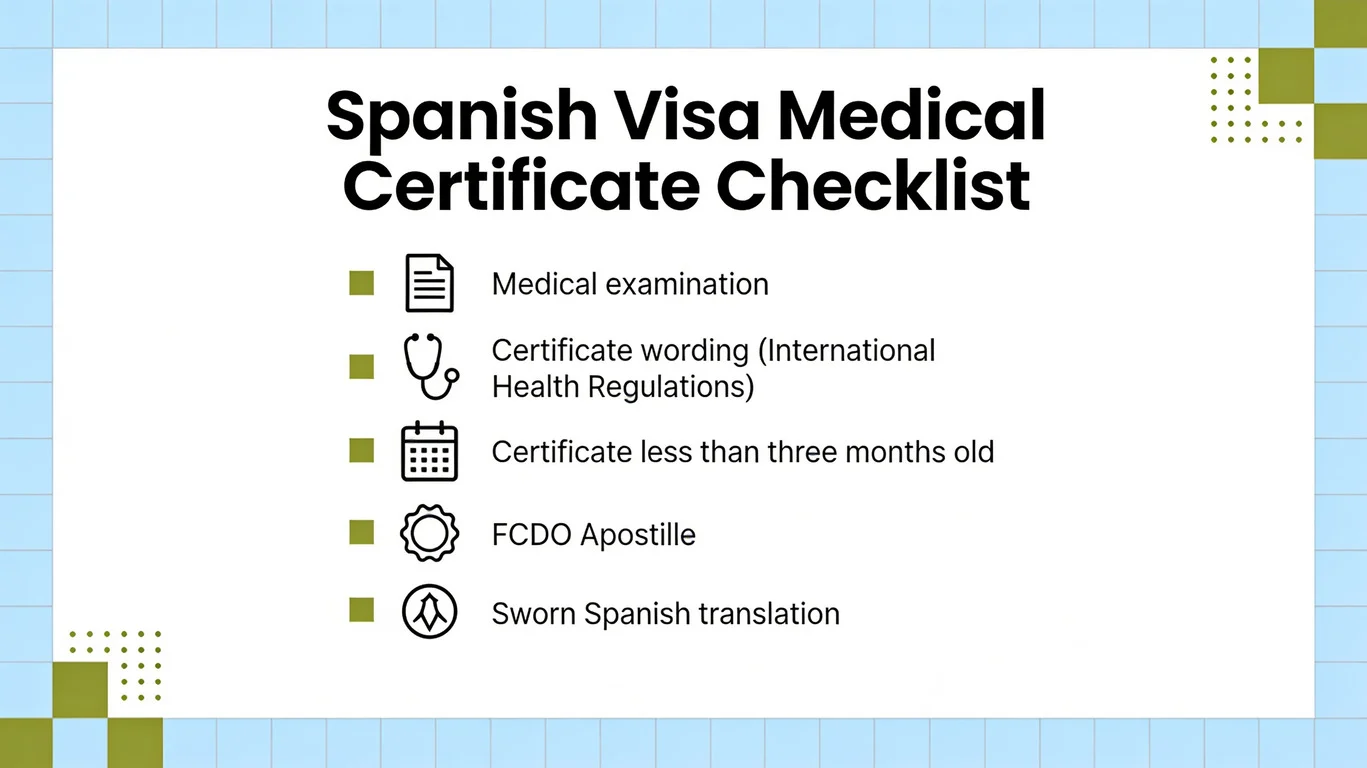
Here’s a quick rundown of the medical certificate requirements when applying for a Spanish visa:
We at London Apostille Services Ltd can help you with the apostille and translation processes.
We’ll review your medical certificate to ensure it meets the FCDO requirements for an apostille, submit it to the FCDO Legalisation Office, and collect it when it is ready. We’ll then arrange for the apostilled document to be translated into Spanish by a sworn translator.
Request a no-obligation quote to prepare your medical certificate for a Spanish visa application.
Why a standard UK doctor’s note will fail the Spanish visa check
Usually, when you get a standard UK doctor’s note for travel purposes, it states that you’re in good health and fit to travel. For a Spanish visa application, this is not enough.
The Consulate is not looking for a general statement about your health. Instead, it requires your medical certificate to confirm that you do not suffer from any disease that could have serious public health implications.
If the required text referencing the International Health Regulations is missing, it may reject even a genuine medical certificate. As such, you must ensure your doctor includes the exact wording required by the Spanish authorities.
The non-negotiable text your Spanish visa medical certificate must include
The text is not arbitrary, as it is directly tied to Spanish immigration rules. The authorities explicitly state that your doctor must formulate the medical certificate in the following (or similar) terms:
Additionally, before leaving the doctor’s appointment, we recommend you verify the following:
Also, confirm that the name on the medical certificate matches the one on your passport exactly.
Which Spanish visas require a medical certificate?
You can expect any long-term stay in Spain (90+ days) to require a health certificate.
Therefore, the following visas require a health/medical certificate:
Non-lucrative visa
Spain typically grants the non-lucrative visa (LNV) to individuals who can finance their stay without working in the country.
Qualifying individuals include:
You’ll need a medical certificate for the Spanish non-lucrative visa.
Student visa
The student visa applies if you’re going to Spain for an academic program longer than 90 days.
It applies to all long-term students, including:
Spain’s study visa requirements require that you obtain a medical certificate.
Other residence and work routes
Generally, if you’re going to stay or work in Spain long-term, you’ll need a medical certificate to secure the necessary visa.
The visa categories that apply include:
How to get your medical certificate ready for a Spanish visa
Although there are several requirements for preparing a medical certificate for a Spanish visa, the process is straightforward once you understand what’s needed.
Here are the steps to ensure Spanish authorities accept your certificate:
Step 1: Book an appointment with a GP or private doctor
Your medical certificate must be prepared by a GP or private doctor registered with the General Medical Council (GMC).
Also, because the certificate must be legalised for use outside the UK (see step 3), the doctor or GP must also be registered with the FCDO.
Therefore, the first step is to seek the services of a GMC- and FCDO-registered doctor.
If you need a Spanish medical certificate, we have partnered with ZoomDoc, they specialise in Spanish medical certificates and all their doctors are GMC and FCDO registered.
Step 2: Confirm the certificate uses the wording Spain requires
Given that the Spanish Consulate will check for the non-negotiable text we discussed earlier, you should explicitly request the custom wording.
Review the certificate before leaving the doctor’s office to confirm it uses the required language. Also, confirm the name and date are correct.
Step 3: Apostille the certificate through the FCDO
For Spanish authorities to accept your UK-issued medical certificate, it must be legalised for international use.
Since Spain is a member of the Hague Apostille Convention, legalising UK documents for Spain involves getting an apostille certificate from the FCDO.
The FCDO will check the credentials of the issuing doctor against their database. If the details match, it issues an apostille verifying the authenticity of the signature and stamp appearing on the medical certificate.
Step 4: Order a sworn Spanish translation
Because Spanish authorities require supporting documents in Spanish, you must have the apostilled medical certificate translated into Spanish.
You cannot use self-translations or standard corporate translations. It must be done professionally.
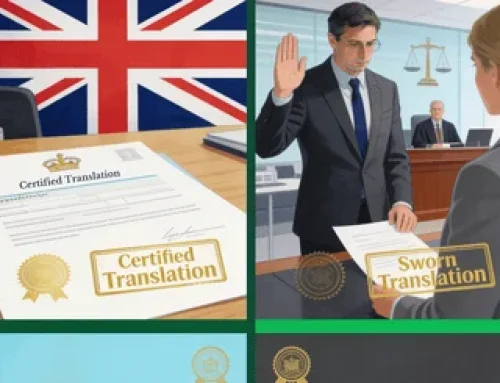
For this reason, London Apostille Services Ltd works with fully qualified sworn translators for our apostille translation service.
We also manage the prior FCDO legalisation step for you, offering:
Ready to prepare your medical certificate for a Spanish visa application?
Use our medical certificate legalisation service for both the apostille processing and sworn translation processes.
Common compliance errors that invalidate your health certificate
You want to avoid common pitfalls that may cause the FCDO or Spanish authorities to reject your health certificate.
Why we insist on an FCDO-registered doctor when the official guidance doesn’t mention it
Neither GOV.UK nor the BLS visa centre tells you to check whether your doctor is registered with the FCDO. Because of this omission, some clients understandably ask why we insist on it — a few assume we’ve got the rules wrong. We haven’t. The requirement comes from the Spanish authorities, not from us.
It matters because of how document legalisation works:
We’ve raised this gap in the official guidance with the relevant bodies, in writing and in person, and they’ve yet to update it. So we check your doctor’s registration before anything else — confirming it now is far cheaper than having your certificate rejected later.
Managing the strict 3-month expiry window and processing timelines
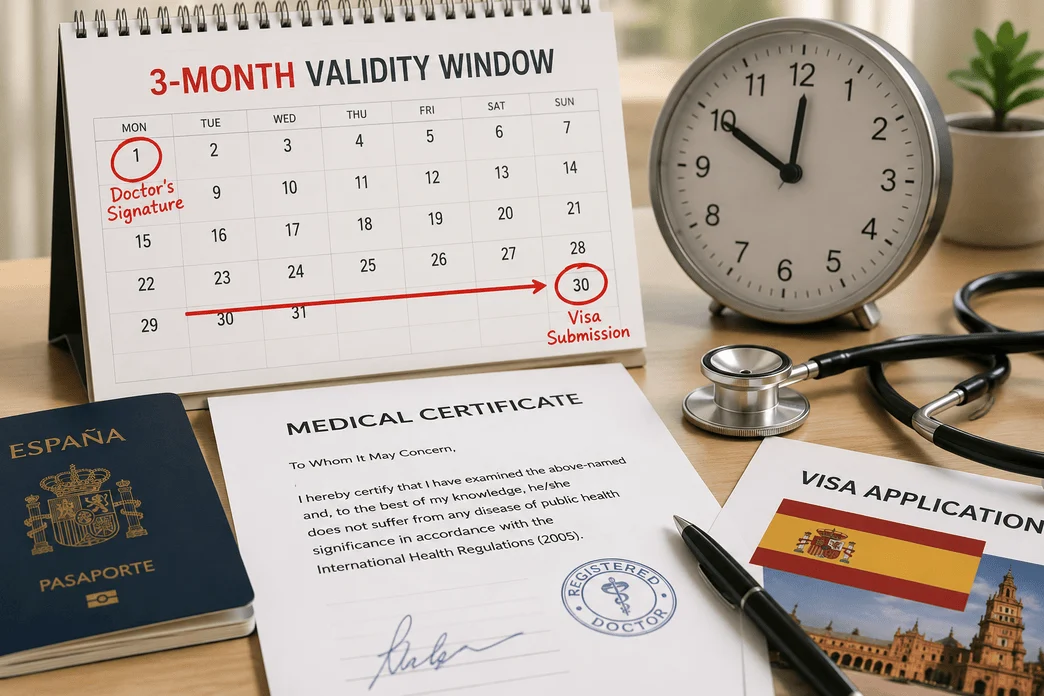
Because the certificate has a shelf life of 3 months from the day your doctor signs it, you must manage the visa processing timeline carefully.
Here’s how:
Frequently asked questions (FAQs)
Here are answers to some commonly asked questions about obtaining a medical certificate for a Spanish visa application.
Let us help prepare your Spanish visa documents
Trying to coordinate the entire process of preparing your documents for a Spanish visa application can be a logistical headache. You have to obtain a compliant medical certificate, have it apostilled, and ensure the apostilled document is professionally translated.
We can take most of these tasks off your plate as follows:
Get an instant quote covering the legalisation of all the UK documents you need for Spain.