
A deed poll is a legal document used to formally record your intention to change your name.
In the UK, it’s the standard method for adults to update their name across official records, including a passport, driving licence, bank accounts, and employer records.
Once signed and witnessed correctly, you can present it to any institution as proof of your new name.
Here’s a full breakdown of who can witness a deed poll, what they need to provide, and when an FCDO-registered solicitor or notary is required.
TL;DR – Deed poll witness requirements
These are the core requirements for any deed poll witness in England and Wales:
If you need help with certification and apostille, call us on 0207 0500 692 or email hello@apostillelondon.com.
Why witness mistakes can affect document acceptance
Some organisations will not accept a deed poll if a witness lives at the same address or is a close relative. HM Passport Office, the DVLA, and banks might check the witness details on your deed poll before accepting it.
A shared address is the easiest to verify. They can compare the witness address written on the deed poll against your own, and a match is immediately disqualifying. A shared surname can also raise questions.
For less obvious family ties, though, institutions have no reliable way to verify the connection.
Some may contact your witness directly using the details on the deed poll to confirm how they know you. If the witness gives conflicting information about how they know you, the deed poll can be rejected.
Submitting a document you know does not meet legal requirements constitutes a false declaration. That can be treated as fraud under UK law.
Who can witness a deed poll?
For a standard unenrolled deed poll used in the UK, your witness needs to be an independent adult with no stake in your name change.
Suitable witnesses include:
They don’t need a professional title or qualification. A teacher, accountant, or shop manager can witness your signature.
Who cannot witness a deed poll?
The relationship between you and the witness is what disqualifies them as a deed poll witness, regardless of the surname they use.
You cannot use:
| Can witness | Cannot witness |
|---|---|
| Unrelated colleague or friend | Spouse or partner |
| Neighbour you don’t live with | Parent, sibling, or other relative |
| Independent adult (18+) | Anyone sharing your address |
| Professional acting in a personal capacity | Anyone under 18 |
What your deed poll witness must provide
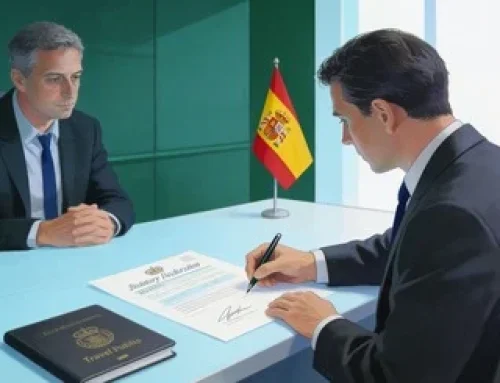
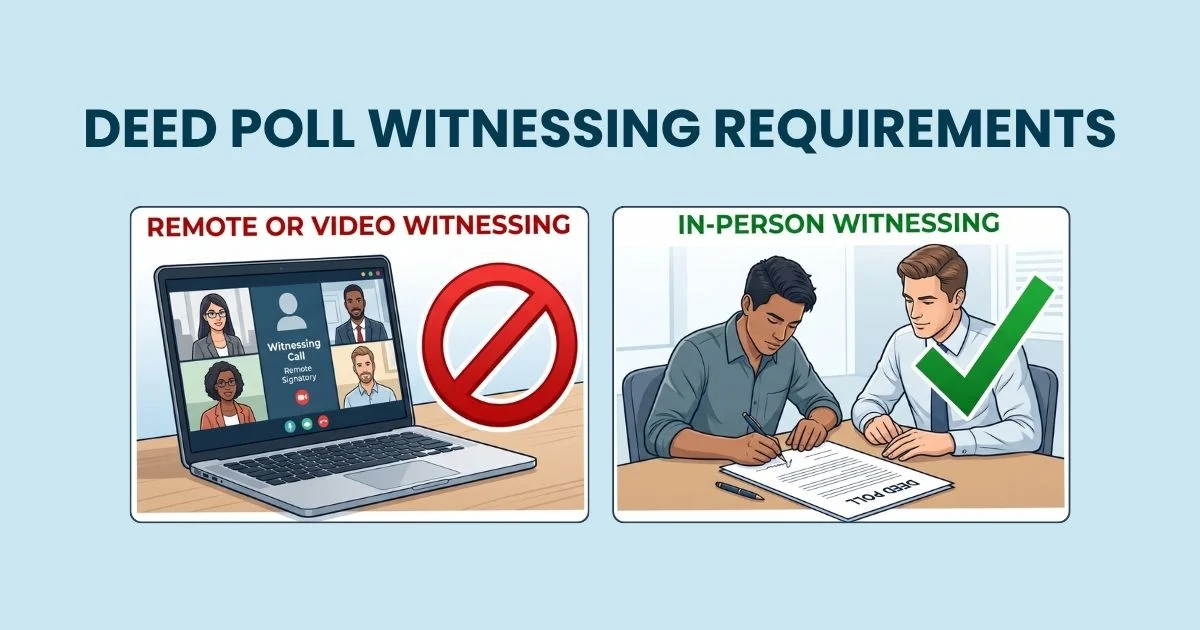
Your witness must watch you sign, then sign the document themselves straight after, on the same day. That must happen in person.
A signature added later from a scanned copy or a photo won’t meet the legal standard for signing a deed. Use black ink and avoid any corrections or overwriting on the page.
They should also write the following directly on the deed poll, next to their signature:
When you submit your deed poll to any institution, they use these details on the document to confirm the witness has no connection to you.
How many witnesses a deed poll needs
GOV.UK states that you need 2 witnesses to sign your deed poll, and both must be 18 or over. While the Law of Property (Miscellaneous Provisions) Act 1989 sets a statutory minimum of 1 witness for a deed signed in person, GOV.UK’s guidance and most UK institutions expect 2. Use 2.
If you enrol your deed poll with the Royal Courts of Justice, the deed poll itself must be signed in front of 2 witnesses.
The two additional enrolment forms (a statutory declaration and a cover sheet) must be signed in front of an FCDO-registered solicitor or other authorised witness.
When you must use an FCDO-registered solicitor or notary public
You must use an FCDO-registered solicitor or notary public for a deed poll when you need to change your name for international use and must obtain a Hague Apostille.
You’ll need an FCDO-registered solicitor or notary in any of these situations:
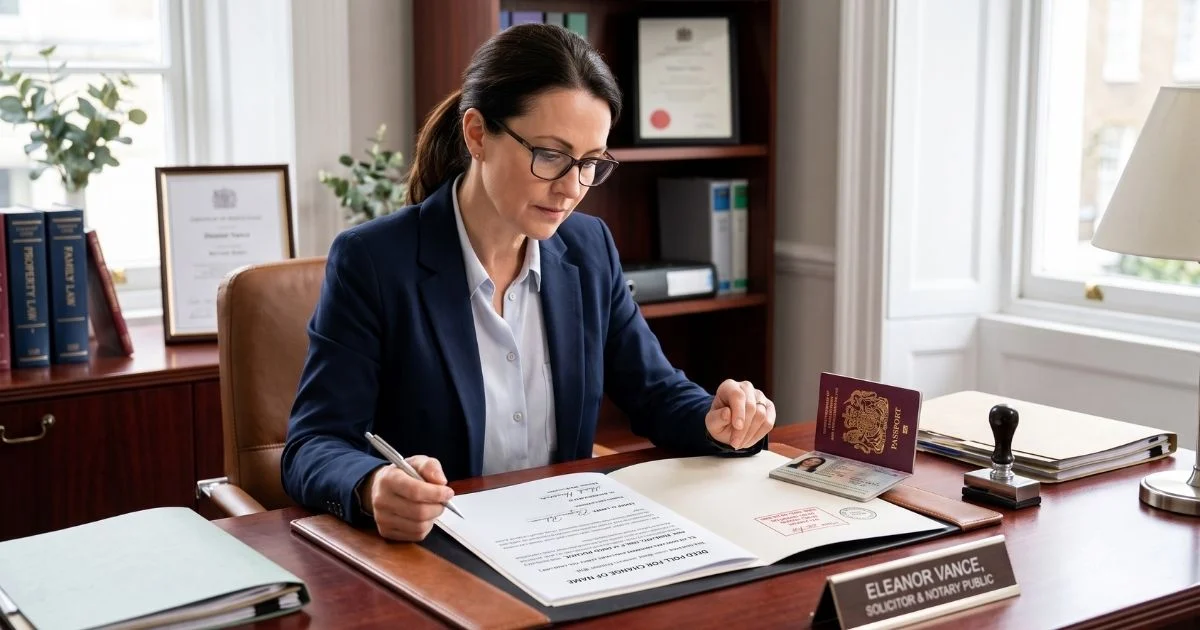
An FCDO-registered solicitor will sign the document and include their professional details during a short appointment. An FCDO-registered notary does the same but applies an official notarial stamp.
Our guide on notary vs solicitor for UK legalisation covers the differences in detail. You can also read more about UK solicitor certification if you need help with that step.
London Apostille Services Ltd coordinates with a network of FCDO-registered solicitors and notaries to certify your deed poll ready for legalisation. We manage the certification and apostille process from start to finish, so you won’t need to deal with multiple providers.
Request a quote if you need your deed poll certified and apostilled.
How to make sure your deed poll is witnessed correctly
Follow these steps to make sure your deed poll is witnessed correctly:
- 1
Decide whether you need the deed poll for UK use or for use abroad. Each requires a different approach.
- 2
For UK use, choose 2 independent adults aged 18 or over who do not live with you and are not related to you.
- 3
For overseas use, book an appointment with an FCDO-registered solicitor or notary and sign in their presence.
- 4
Use black ink and sign clearly, without corrections.
- 5
Have your witness sign straight after you and write their full name, home address, occupation, and the date directly on the deed poll next to their signature.
- 6
Check every field is complete before submitting the document.
- 7
Keep the signed original safe.
The same independence principle applies well beyond deed polls. If you’re also dealing with a power of attorney, the question of who can witness a power of attorney follows much the same logic, and it’s worth checking if that’s relevant to you.
More broadly, who can witness a signature on a legal document covers the wider rules that sit behind all of this.
Frequently asked questions (FAQs)
Below are a few frequently asked questions about witnessing a deed poll.
Ensure your deed poll is accepted abroad
If you’re planning to use your deed poll in another country, apostille legalisation is usually the step that makes it accepted.
Around 130 countries accept a UK apostille under the Hague Convention, including China. For countries outside the Convention, like Qatar, Egypt, and Kuwait, you’ll also need embassy attestation on top of the apostille.
Our deed poll apostille service at London Apostille Services Ltd covers solicitor certification and the apostille certificate as part of one package. Pricing starts from £120 for a 3 to 4 day turnaround, and that includes admin fees, FCDO charges, and VAT. A next business day option is available from £135 if you need it faster.
If your destination also requires a certified translation or embassy attestation, we handle those steps too.
Get in touch to tell us where your deed poll needs to go, and we’ll confirm exactly what’s required.