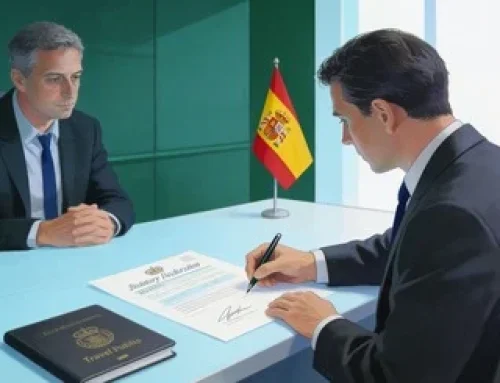

A will is the legal document that sets out what happens to your money, property and possessions after you die, and who should look after your children if they are still young. For it to be legally valid, you have to sign it in front of two witnesses.
This requirement comes from the Wills Act 1837, which still governs how wills are made and witnessed in England and Wales today.
Getting this right matters. It determines whether your wishes are carried out as written, or whether a gift, or even the whole will, fails, and your estate ends up shared out under the intestacy rules instead.
This guide walks through who can and cannot witness your will, the mistakes that catch people out most often, and how to get it right the first time.
Quick answer – Who can witness a will?
In short, almost any independent adult can witness your will, as long as they will not inherit from it.
To be a valid witness in England, Wales or Northern Ireland, a person must:
A neighbour, a friend or a colleague can all do the job.
Witnessing is not optional. An unwitnessed will is not legally valid, so you need two witnesses before it counts for anything.
Here is how the rules compare across the UK:
| Requirement | England, Wales and Northern Ireland | Scotland |
|---|---|---|
| Witnesses needed | Two | One |
| Minimum age | 18 | 16 |
| Must be able to see you sign | Yes | Yes |
| Witness signs the will | Yes | Yes |
| Can inherit from the will | No (the gift fails) | Seek Scots-law advice |
One person cannot count as both witnesses, so in England and Wales, you always need two separate people. Scotland has its own succession rules, so if your will is signed under Scots law, take specific advice on who should witness it.
Why an incorrect witness choice can accidentally void an inheritance
One witnessing mistake can void a single gift while the rest of your will stays valid.
Under section 15 of the Wills Act 1837, if a beneficiary, or the husband, wife or civil partner of a beneficiary, acts as a witness:
The rule exists to stop fraud and pressure. A beneficiary who helps witness the signing has an obvious interest in the outcome, so the law removes the temptation by cancelling their gift.
Say you leave your home to your sister, and her husband acts as one of the two witnesses. Her inheritance can fail, even though you wanted her to have the house. The property then falls into the rest of your estate, or passes under the intestacy rules if nothing catches it.
There is one gap in this rule, though. It covers spouses and civil partners of beneficiaries, but not unmarried partners who live together:
Who can witness a will? The independent witness checklist
Run through this quick checklist before anyone puts pen to paper:
A few extra habits make life easier for whoever handles your estate:
Your will should also include an attestation clause, a short paragraph confirming that everyone signed together in the correct way.
The law does not require it, but without one, the probate registry may demand a sworn statement later. That slows everything down.

Who cannot witness a will (and common misconceptions)
Most of the confusion here comes from good intentions, so it helps to separate the myths from the real rules.
| Person | Can they witness? | Why |
|---|---|---|
| A beneficiary | No | Their gift is voided under section 15 |
| The spouse or civil partner of a beneficiary | No | The beneficiary’s gift is voided |
| Someone under 18 (under 16 in Scotland) | No | Below the minimum age |
| Someone who cannot see you sign, including a blind person | No | A witness must be able to watch the signing |
| An executor who is not a beneficiary | Yes | An executor takes no gift, so there is no conflict |
| An attorney under a power of attorney, if not a beneficiary | Yes | Same reasoning as an executor |
| A relative who is not a beneficiary | Yes | Legal, though not always wise |
| A solicitor or notary | Yes | Often the safest choice |
The most common myth is that your executor cannot witness the will. They can, provided they inherit nothing under it. Acting as executor is a responsibility that comes with no inheritance, so there is no conflict.
Can a family member witness a will? Yes, if they are not a beneficiary and not married to one. A relative who takes nothing under the will can sign. Even so, solicitors generally recommend using someone outside the family where you can.
Family witnesses create two risks. A relative who takes nothing today could still end up entitled to inherit if another gift fails, which puts their own entitlement at risk. Relatives are also more likely to face claims of pressure if the will is ever challenged.
A witness with no connection to your family avoids both risks.
A witness also has to be able to see the signing, so it cannot be someone who is blind or unable to watch you sign. The courts confirmed this in Re Gibson [1949] P 434.
Can a solicitor witness a will? Yes, and for some, it is the safest choice.
When a professional witness may be safer
2 neighbours are enough for most straightforward wills. Some situations, though, call for a professional witness such as a solicitor or notary.
Consider a professional when:
Where capacity is in question, it is safer to ask a doctor to assess the person and act as a witness, then keep a note of that assessment with the will. A short medical check now can prevent a challenge later.
A professional also gives you protection that a homemade will does not. If a solicitor or notary makes an error that costs an intended beneficiary their inheritance, that beneficiary may have a claim against them, a principle the courts set out in White v Jones.
For documents that need a solicitor’s sign-off alongside a will, such as certified copies, our solicitor certification service can help.
Signing your will as an expat or overseas beneficiary
Living abroad, or naming beneficiaries who live outside the UK, can complicate how your will is treated once you sign it. Even a correctly witnessed will can face extra checks from a foreign bank, land registry or court.
At London Apostille Services Ltd, we arrange notarisation and apostilling through FCDO-registered solicitors and notaries, so your will is ready for use overseas. Start your order to find out what your will needs before it travels.

Why witnesses must be physically present when you sign
Section 9 of the Wills Act 1837 says you must sign your will, or acknowledge your signature, in front of two witnesses who are present at the same time. They then sign in front of you. Missing any part of that sequence will usually make the will invalid.
The government’s guidance puts it plainly. Your witnesses must have a clear view of you as you sign, and you must have a clear view of them as they sign.
Presence is about line of sight. Your witnesses do not have to be in the same room, as long as they can see you sign.
In a well-known 1781 case, Casson v Dade, a woman felt faint and waited in her carriage outside the office, yet her will held up because she could see the witnesses sign through the window.
The reverse happened in Brown v Skirrow in 1902, where a will failed because a witness was busy serving a customer and did not see the signing.
Since 1 February 2024, every new will has to be witnessed by 2 people who are physically there with you. Watching over a video call no longer counts.
Frequently asked questions (FAQs)
Here are quick answers to the questions that come up most often about witnessing a will.
Ensure your estate plans are legally airtight
Getting the witnessing right is the simplest way to make sure your will does what you intend. We have covered the rules above, so we will not repeat them here.
One situation is still worth planning for on its own. If you sign your will abroad, or your estate includes property or beneficiaries in another country, your will (or the grant of probate that follows) often has to be legalised before a foreign authority will accept it.
This is where we come in.
We are London Apostille Services Ltd, and we help people get UK documents, including wills and grants of probate, ready to use abroad. Our guide to document legalisation explains when this applies.
The usual route is to have an FCDO-registered notary certify the document, then obtain an apostille, the official confirmation that a UK signature or stamp is genuine.
Our last will and testament apostille service gets your will recognised overseas, so it is accepted by foreign authorities the same way it is at home.
For a document heading overseas, get a custom quote today, and we will handle the legalisation from start to finish.