
Thinking about teaching in Dubai as a UK graduate or qualified teacher?
The path has several moving parts that can feel overwhelming, from the qualifications schools expect to KHDA approval and the work visa. On top of that, most applicants stumble over the full United Arab Emirates (UAE) attestation chain their UK documents have to clear.
In this guide, we’ll walk you through how to become a teacher in Dubai, including the qualifications and documents you’ll need, and how UAE document attestation works.
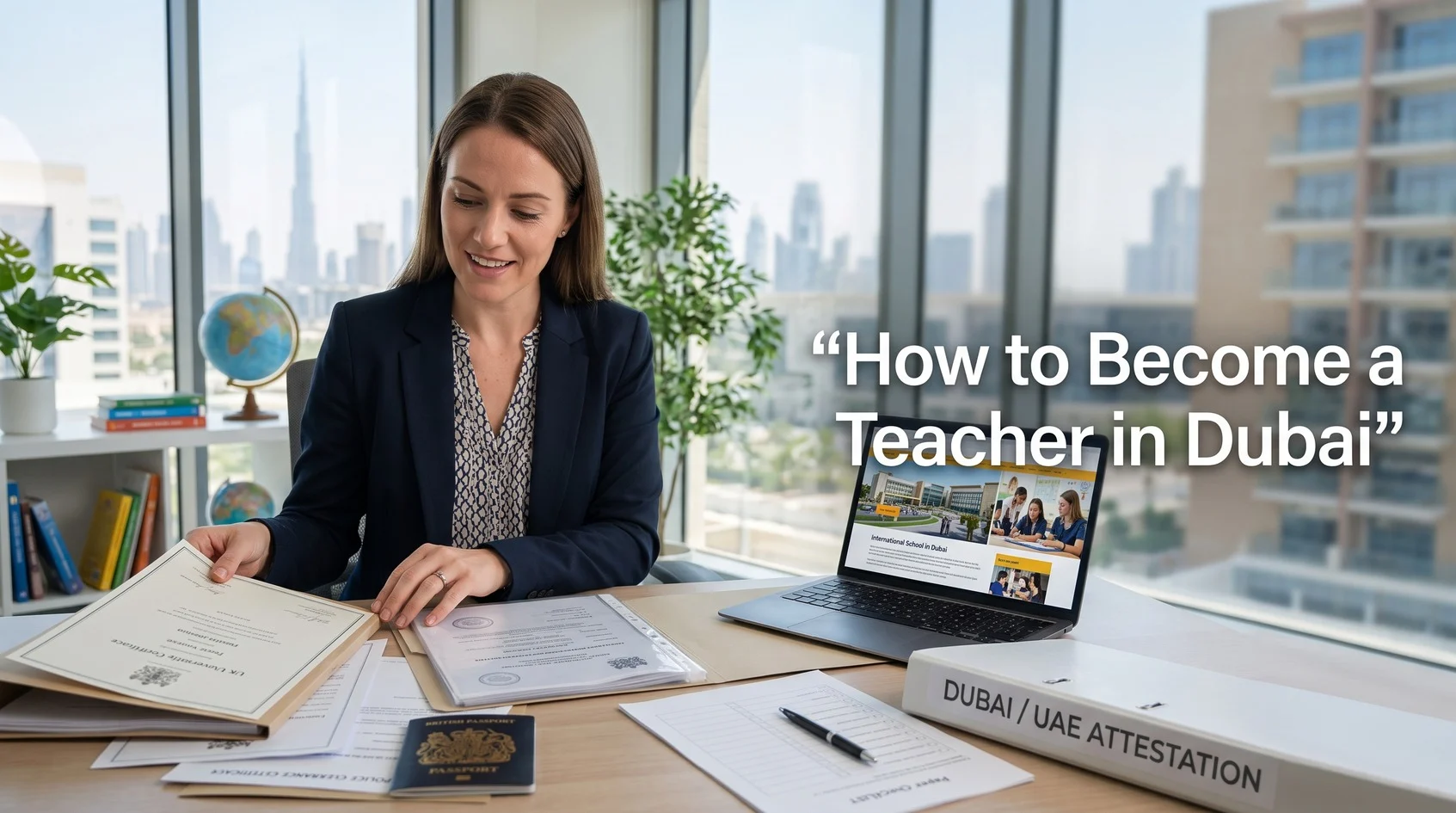
TL;DR: How to become a teacher in Dubai
Here’s a quick overview of what you’ll need to teach in Dubai:
Why Dubai attracts UK teachers
Most of the UK teachers you’ll meet in Dubai work in private international schools. The UAE’s public schools hire some expatriate teachers, though in smaller numbers.
Here’s why Dubai appeals to UK teachers, especially in the private sector:
- 1
Tax-free employment income: Private school teachers usually earn a monthly salary ranging from 9,000 to 15,000 AED (UAE dirhams). As a department head or leader, you can earn 14,000 AED to 21,000 AED or more, depending on the institution and other aspects. The good news is that the UAE doesn’t apply personal income tax to these salaries.
- 2
Demand for British-curriculum teachers: Many families choose the UK curriculum more than any other in Dubai’s private schools. According to KDHA’s figures, 37% of students, representing more than a third of the student population, choose the British curriculum. As a result, private schools grew their teaching staff by 9%, to 27,284.
- 3
Attractive relocation packages and incentives: Many schools offer housing support and health insurance for teachers moving from the UK to Dubai. Depending on your employer, you may also get annual return flights, which lowers the upfront and overall cost of your relocation.
Requirements to teach in Dubai for UK nationals
KHDA, Dubai’s education regulator, sets baseline standards that every private school must meet before it can appoint you.
Here’s what is needed of you:
Essential qualifications
Many Dubai schools prefer experienced teachers, but prior teaching experience isn’t always required. Under current KHDA rules, newly qualified teachers can be appointed as long as they complete at least six months of supervised teaching practice.
The list below shows what each qualification is, where schools ask for it, and where you can earn it:
UK documents you may need to prepare
Once you have a job offer, your school will usually ask you to provide a set of documents so it can complete its recruitment checks and the KHDA appointment process.
The exact list can vary by school and role, but you should expect to prepare the following:
Note: You’ll also need your marriage and birth certificates if you’re bringing a spouse or children.
5-step roadmap to teaching in Dubai as a UK applicant
Here are the 5 steps you can expect from qualification to your first classroom day:
The crucial step: How to attest UK documents for teaching in Dubai
The UAE isn’t part of the Hague Apostille Convention. That’s why a UK apostille alone won’t satisfy KHDA or your school’s HR team. Every key UK document needs a further attestation step before the UAE will recognise it.
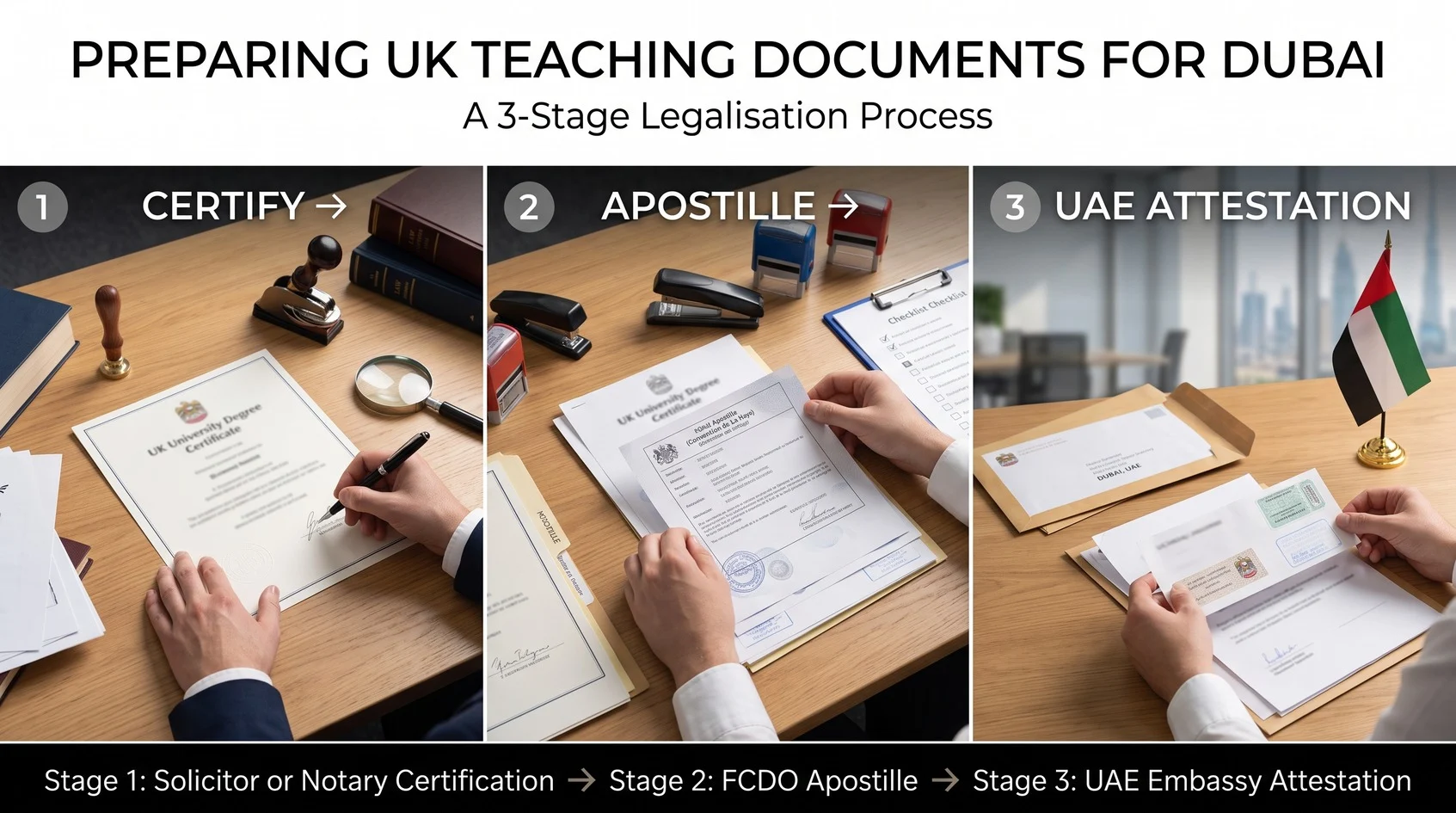
The 3 points below cover the order your documents follow:
- 1
Solicitor certification first: Your university or training provider will have issued your degree, PGCE, or QTS certificate as private documents already. A UK notary or solicitor then certifies them.
- 2
Then the FCDO apostille: After the document is certified by the UK solicitor or notary, the FCDO can legalise it. This takes the form of an apostille, such as an apostille for your UK degree certificate, to confirm that your solicitor’s signature is genuine.
- 3
Then UAE embassy attestation: The UAE hasn’t acceded to the Hague Convention, which means that your apostilled document also needs UAE embassy attestation in London. The embassy now covers the UAE Ministry of Foreign Affairs step digitally, which removes the need for a separate stamp on arrival.
Not every document follows exactly the same route
The preparation stage depends on the document type.
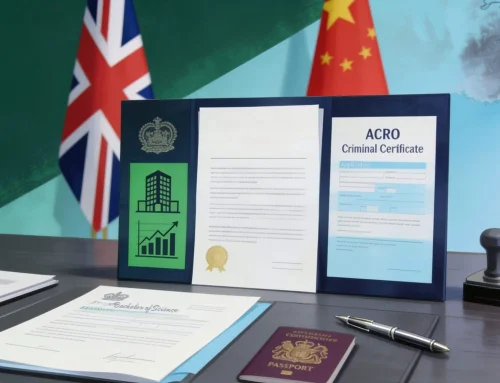
For example, a UK university degree or PGCE certificate may need solicitor or notary certification before it can receive an apostille. An eligible original UK police certificate, such as an ACRO Police Certificate, does not necessarily require the same certification step before FCDO legalisation.
Your school may also require different documents depending on your role, qualifications and previous countries of residence. It is therefore worth confirming exactly which documents need to be attested before you begin the process.
Allow enough time for UAE attestation
The FCDO apostille stage can often be completed quickly, including through an express service where eligible. UAE attestation has its own processing and handling times (7 to 10 working days), so it is sensible to start as soon as your school confirms which documents it requires.
Preparing the correct documents from the outset can prevent delays later in the KHDA, employment and residence process.
How we can help speed up your relocation
At London Apostille Services Ltd, we help UK teachers prepare and legalise the documents they need for use in the UAE.
Our service for Dubai-bound teachers covers the following:
Want your attestation on track for your school’s deadline?
Get a custom quote today for an all-in price and a timeline built around your start date.
Frequently asked questions (FAQs)
Here are answers to the questions UK teachers ask most about teaching in Dubai:
Your next steps to become a teacher in Dubai
To teach in Dubai, you will normally need a recognised degree, the qualifications required for your particular teaching role, and the police clearances and professional references required under KHDA rules.
Once you have secured a job offer, your school will confirm which documents it needs for the appointment process. UK academic qualifications that must be recognised in the UAE will normally need to be properly legalised and attested before they can be used.
The exact UK legalisation route depends on the document. Academic certificates such as degrees and PGCEs may need solicitor or notary certification before FCDO apostille legalisation, while other documents can follow a different route. Once the required UK legalisation is complete, the documents can then proceed to UAE attestation for use in Dubai.
At London Apostille Services Ltd, we can coordinate the certification, FCDO apostille and UAE attestation stages for you, depending on the documents your school requires.
If you are preparing to move to Dubai, confirming the document requirements early can help you avoid delays later in the KHDA, employment, and residence process.
Contact us today to map out your document legalisation timeline.