
Whether you’re a new tenant, an adult living at home, or a new arrival in the UK, lacking utility bills in your name shouldn’t prevent you from proving your address.
Many UK and foreign authorities accept a wide range of alternative documents. This guide explains how to get proof of address without bills and what to do if you need to use the document outside the UK.
TL;DR – How to get proof of address without bills in the UK
The commonly accepted alternative proofs of address in the UK include:
If you plan to use any of these documents outside the UK, you must legalise them for international use by getting an FCDO-issued apostille.
London Apostille Services Ltd. is an FCDO-registered apostille facilitator, and we can manage the legalisation process on your behalf so you don’t have to navigate complex government bureaucracy.
Request a custom quotation by telling us what document you have and where it is going.
What counts as proof of address in the UK?
A proof of address in the UK is an official document that confirms your current residency. The requirement to prove where you live is driven by law.
Under the Money Laundering Regulations 2017, UK financial institutions, legal professionals, and estate agents are required to prevent financial crime through the Know Your Customer (KYC) process. Therefore, these organisations will verify your residence using trusted third-party documents.
For a document to count as a valid proof of address, it must have the following key components:
Also, according to “one document, one purpose”, you cannot use the same document to satisfy two different requirements in one application. For instance, if you use your UK driving license to prove your identity, you cannot use it as proof of address.
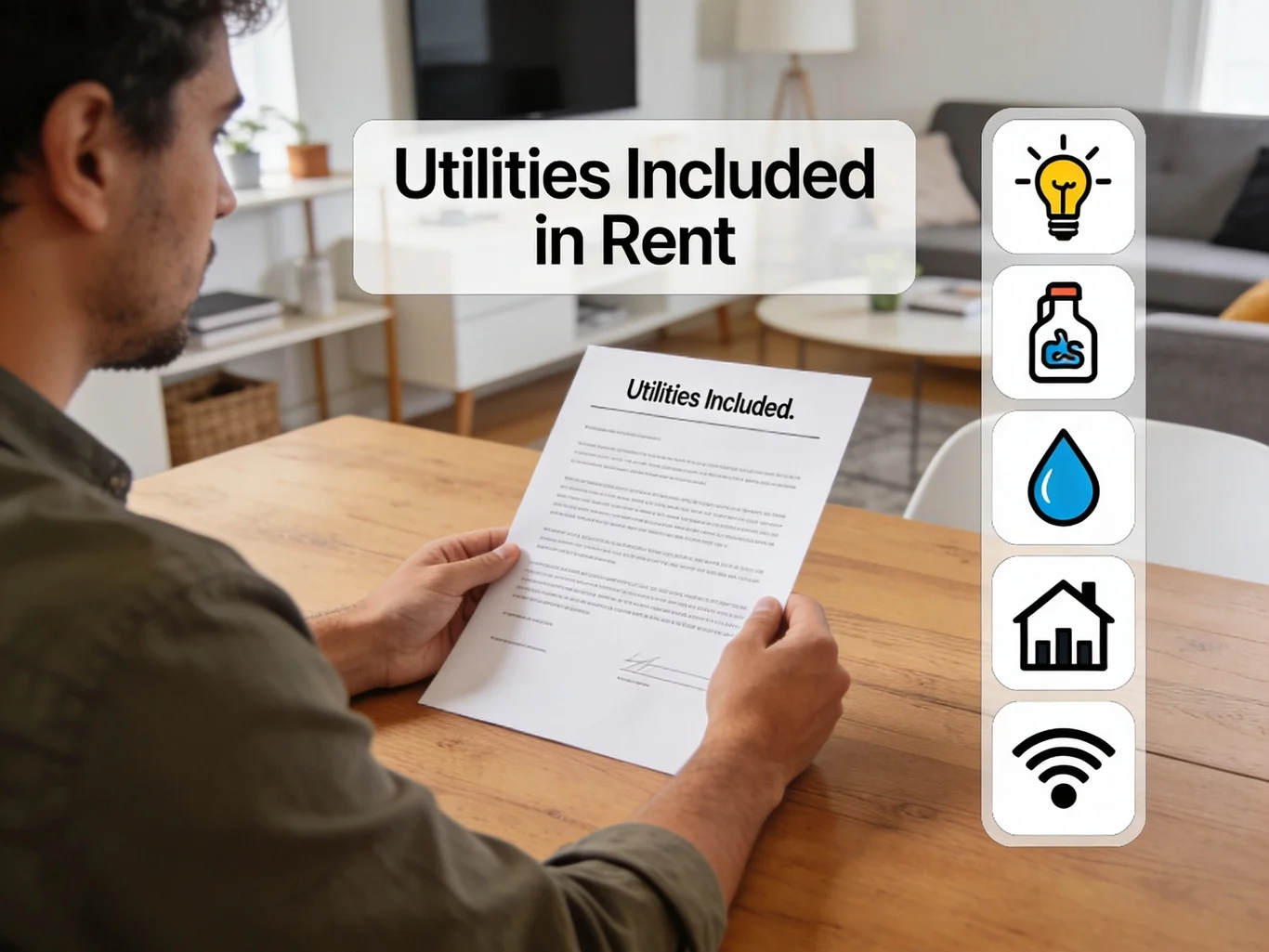
Why bills are not always an option for proof of address
Although utility bills are the standard way to prove address, they may be unviable for many people due to their current living situation.
For instance, you may not have a bill in your own name in the following common scenarios:
Documents accepted as proof of address without bills
Documents issued by a trusted authority, such as a government body or a regulated financial institution, are generally accepted as proof of address.
Such documents include:
Some organisations may also accept the following alternative documents:
It’s important to check with the requesting authority, as requirements for proof-of-address documents vary between institutions. Also, confirm ”recency” guidelines, as some authorities will reject documents older than 3, 6, or 12 months.
How to get proof of address without bills
The practical route to get proof of address without bills depends on your current living situation and how fast you need the document.
The fastest path is to access existing financial or tax statements online. This applies if these statements already have your current address.
When getting these statements, download the full document (all pages) on company letterhead with your current residential address visible. A screenshot will be rejected.
If the statements don’t have your current address, you have the following options:
Alternatively, if you’re actively renting and the requesting authority accepts tenancy agreements as proof of address, you can secure a signed one from your estate agent.
Special situations that require extra support
If you’re a new arrival to the UK, a student in shared housing, an adult living with family, or renting from a private landlord, you can still get a proof of address document.
Here’s how to navigate the process in these special scenarios:
Proof of address for new arrivals to the UK
You likely don’t have an established relationship with a financial institution or tax authority.
Therefore, the most realistic path is to prioritise the following options:
Proof of address for students in halls or shared housing
If you’re a student in shared housing, you may use the following as proof of address:
Some universities allow downloading a proof of student status and proof of address through the university portal if you’re already fully enrolled.
Proof of address for adults living at home with family
When you’re living at home, and all bills are in your parents’ names, you can pursue the following options:
Proof of address when renting from a private landlord
Some institutions accept tenancy documents signed by a private landlord as proof of address.
The qualifying tenancy documents include:
Notarisation and certification of proof of address for official use
If you plan to use your proof of address outside the UK, you will require notarisation or solicitor certification as well as an apostille certificate.
Let’s explore where and how these additional formal processes apply.
When a sworn affidavit of address is required
Where you can’t get a standard proof of address, you may use a sworn affidavit.
It is a written statement formally declaring your residence. You’ll sign it in the presence of a Commissioner for Oaths or a notary public.
Before arranging for an affidavit, confirm with the requesting authority if they accept this type of document.
How a notary public or solicitor can certify your document
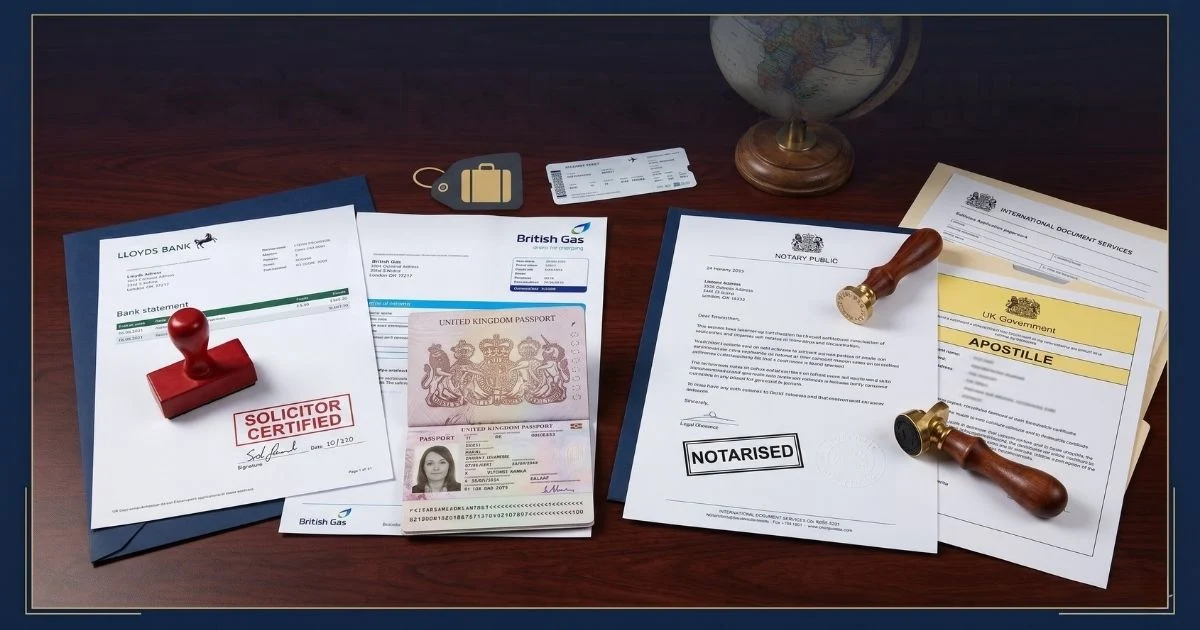
Once you have your proof of address, you must get it certified by a solicitor or notary public before it can be legalised for international use.
Document legalisation is carried out by the FCDO, but it cannot independently verify the authenticity of signatures and stamps on documents issued by non-government bodies. As such, it relies on FCDO-registered solicitors and notaries to do the verification.
The solicitor or notary will certify your document by inspecting it for authenticity and by verifying your identity. They will then write, sign, and stamp a certification statement.
Apostille or legalisation for use abroad
After certifying your proof of address document, you can now present it to the FCDO for legalisation.
The FCDO legalises documents for international use by issuing an apostille certificate. The apostille is accepted as is in the 129 countries that are parties to the Hague Apostille Convention. If you’re headed to a non-Hague country, you’ll require embassy attestation in addition to the FCDO apostille.
Need help navigating this legalisation process efficiently?
Our firm is an FCDO-registered apostille facilitator, and we can help you in the following ways:
Additionally, if you’re headed to a non-Hague country, we’ll facilitate the embassy attestation process.
Request a no-obligation quote by telling us which proof of address document you have and where it is going.
Frequently asked questions (FAQs)
Here are quick answers to the questions UK readers most often ask about getting proof of address when they do not have a bill in their name.