
A statutory declaration of solvency is a legal document that many UK company directors will encounter when closing a solvent company. Getting it wrong carries serious consequences, including criminal liability.
Whether you are preparing to wind up a company or simply need to understand the process, here is everything you need to know.
What is a declaration of solvency?
A declaration of solvency is a sworn legal statement made by company directors confirming the company can pay all its debts in full, plus interest at the official rate (currently 8% per annum), within 12 months of winding up.
The legal basis is Section 89 of the Insolvency Act 1986. This section sits within Part IV of the Act and governs the formal winding up of solvent limited companies.
One thing worth clarifying is that the declaration does not have to state the company is solvent. It states the company will be able to pay its debts within 12 months. Directors can factor in third-party support, such as a parent company’s commitment, when forming that opinion.
Once filed at Companies House, the declaration becomes a public record.
When is a statutory declaration of solvency required?
The statutory declaration of solvency is required for one specific process: a Members’ Voluntary Liquidation (MVL).
An MVL is how you formally close a solvent company and distribute its assets to shareholders. You might go this route if you are retiring, restructuring, or simply want to extract surplus funds in a tax-efficient way.
Distributions in an MVL are treated as capital gains rather than income, which can be significantly more favourable depending on the director’s tax position.
The declaration is not required for striking a company off the register (via DS01), which is an informal dissolution route. There are no sworn statements involved in that process.
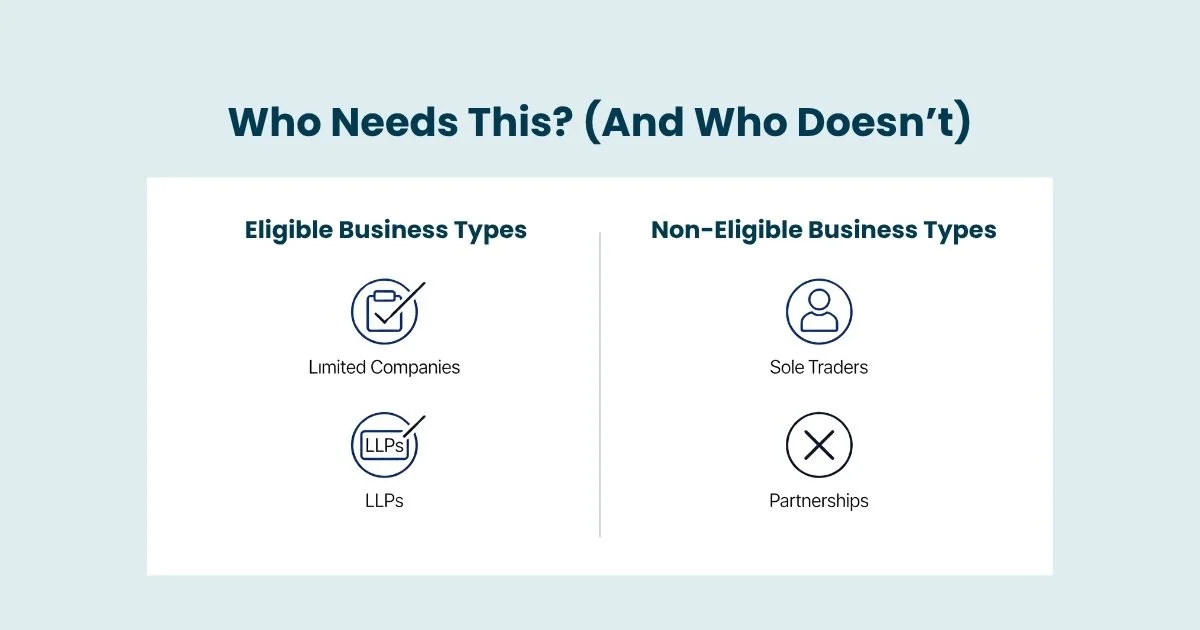
The s.89 declaration applies to limited companies and LLPs. Sole traders and traditional partnerships cannot enter an MVL and are not affected by this requirement.
What must a statutory declaration of solvency include?
Section 89 and Rule 5.1 of the Insolvency (England and Wales) Rules 2016 set out the required content.
The declaration must include:
The statement of assets and liabilities must be detailed.
Under Rule 5.1(2), it must include:
You also need to include the sworn wording set out in the Statutory Declarations Act 1835:
“I/We do solemnly and sincerely declare that… and I/we make this solemn declaration conscientiously believing the same to be true, and by virtue of the provisions of the Statutory Declarations Act 1835.”
Finally, it must include the jurat, signed by the witnessing solicitor or notary public, recording their name, qualification, address, and the date and place of witnessing.
Statutory declaration of solvency template
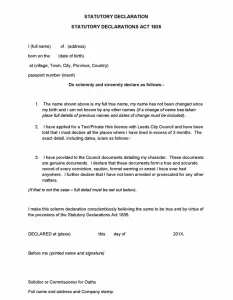
There is no official government template for the declaration of solvency itself. The old prescribed form (Form 4.7) was scrapped when the Insolvency Rules 2016 came into force. Your insolvency practitioner will prepare the document to meet the Rule 5.1 requirements.
That said, if you want to understand how a statutory declaration is structured as a sworn document before you get started, here is a free statutory declaration of solvency template you can download.

How to get a statutory declaration of solvency in the UK
Here is how the process works, step by step. Keep a close eye on the deadlines, as missing any of them can land you in legal trouble.
- 1
Engage a licensed insolvency practitioner: They will advise on whether an MVL is appropriate, prepare the declaration, and act as liquidator once appointed.
- 2
Review the company’s financial position: Directors must conduct a full inquiry covering all debts, contingent liabilities, winding-up costs, and projected interest.
- 3
Hold a directors’ meeting: Section 89(1) requires the declaration to be made at a directors’ meeting. You cannot simply sign it individually.
- 4
Sign and swear the declaration: All required directors sign in person before a solicitor or notary public.
- 5
Call a general meeting of shareholders: This must happen within 5 weeks of the declaration being made.
- 6
Pass a special resolution: Shareholders vote for voluntary winding up, requiring a 75% majority by value.
- 7
Advertise in The Gazette: The winding-up resolution must be published within 14 days of being passed.
- 8
File the LIQ01 at Companies House: Submit within 15 days of the resolution, with the declaration attached.
Missing the 15-day filing window is an offence. Section 89(6) IA 1986 makes both the company and every officer in default liable to a fine and a continuing daily default fine.
Who can witness a declaration of solvency?
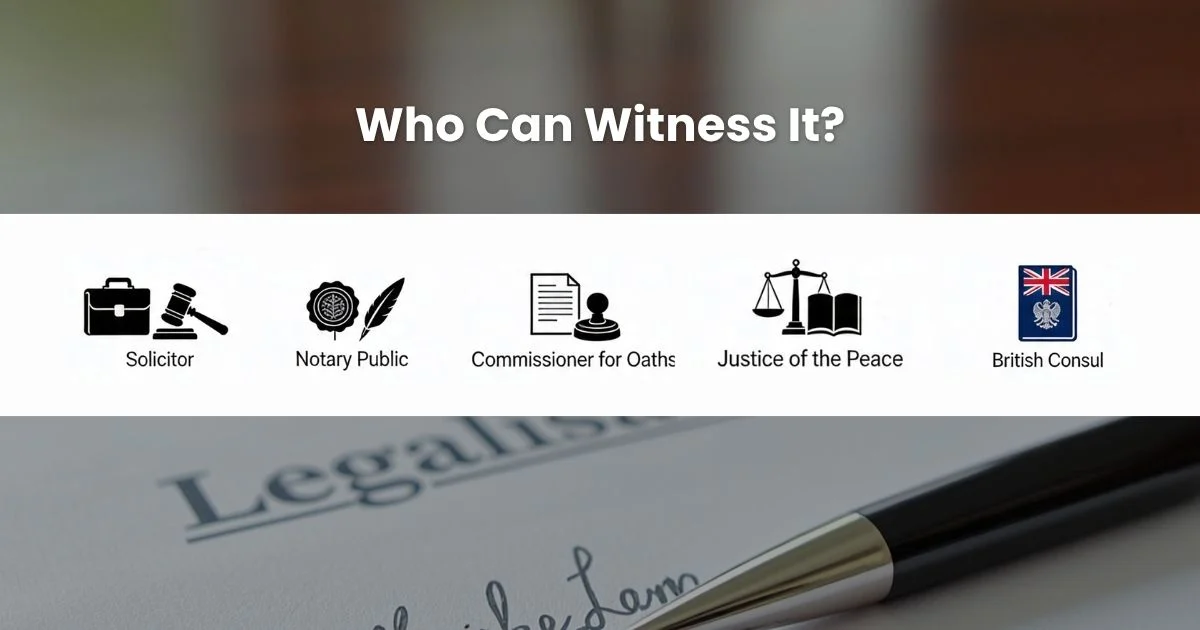
Because the declaration is a statutory declaration under the 1835 Act, it must be made before a person authorised to administer oaths.
Authorised persons include:
Accountants, family members, colleagues, and unqualified staff at a solicitor’s office cannot witness the declaration. A defective witnessing makes the document legally invalid.
The director’s own solicitor can technically witness the declaration, but using an independent solicitor is best practice to avoid any challenge on impartiality grounds.
Witnessing must be done in person. There is no general provision in English law for remote witnessing of statutory declarations.
Statutory declaration of solvency vs. statement of solvency
These 2 documents are frequently confused, but they are separate legal instruments with different purposes.
| Feature | Statutory declaration of solvency (s.89 IA 1986) | Solvency statement (ss.642–643 CA 2006) |
|---|---|---|
| Purpose | Members’ Voluntary Liquidation | Private company capital reduction |
| Signatories | Directors, or majority if more than 2 | All directors, without exception |
| Sworn document? | Yes | No |
| Timing window | Within 5 weeks before resolution | Within 15 days before resolution |
| Filed using | LIQ01 | SH19 |
| Penalty for false statement | Up to 2 years’ imprisonment | Up to 2 years’ imprisonment |
The solvency declaration used in an MVL is a sworn document. The solvency statement for a capital reduction is a written statement only. They require different signatories and different filing processes.
You will see the 2 terms used interchangeably on some websites, but that is technically incorrect.
Apostille for a statutory declaration of solvency
In some situations, a statutory declaration of solvency needs to be apostilled for use abroad.
Common scenarios include:
Under the Hague Convention 1961, a statutory declaration witnessed by a solicitor or notary is treated as a public document eligible for an apostille.
If a notary witnessed the declaration, it is a notarial act and goes straight to the FCDO for an apostille.
If a solicitor witnessed it, the FCDO treats the solicitor’s signature as that of a public official, provided the solicitor is registered with the FCDO.
No further notarisation is required before applying for the apostille, as long as the original signature can be verified by the FCDO.
If you need an apostille for your declaration of solvency, London Apostille Services Ltd can handle the process from start to finish, including FCDO submission and document return. Request a quotation to get a fixed price for your specific document.
Frequently asked questions (FAQs)
Below are a few commonly asked questions about statutory declarations of solvency.
Next steps
If your company is entering an MVL, an insolvency practitioner will prepare and manage the declaration for you.
If you need the declaration apostilled for international use, the process is straightforward provided the original was witnessed by a solicitor or notary public registered with the FCDO.
London Apostille Services Ltd handles apostille applications for statutory declarations and all supporting documentation. Contact our office to confirm what your specific destination country requires before submitting your documents.