
If you plan to use your documents abroad for work, education, immigration, or any other formal purpose, you’ll likely need an apostille.
The process of acquiring the apostille is standardised, but it can still be confusing and overwhelming if it’s your first time dealing with the FCDO Legalisation Office. This post will help you navigate the bureaucracy by outlining how to get an apostille quickly and efficiently.
TL;DR – How to get an apostille
The standard procedure for acquiring an apostille in the UK is as follows:
Which documents can be apostilled?
Most personal, educational, business, and legal documents can be apostilled. For example, foreign authorities often request apostilles for the following documents:
Additionally, the FCDO can only apostille documents originating from the UK. If you have a foreign document, you can get it apostilled in its country of origin – or check with a UK notary or apostille agency if your foreign document can be processed in the UK.
How to check if your document is apostille-ready
Ensuring your document is apostille-ready before submitting it to the FCDO is essential to avoid rejections and delays.
Here are some of the requirements to keep in mind:
Further, ensure the document is in good condition. The FCDO will reject it if it is laminated, faded, or damaged.
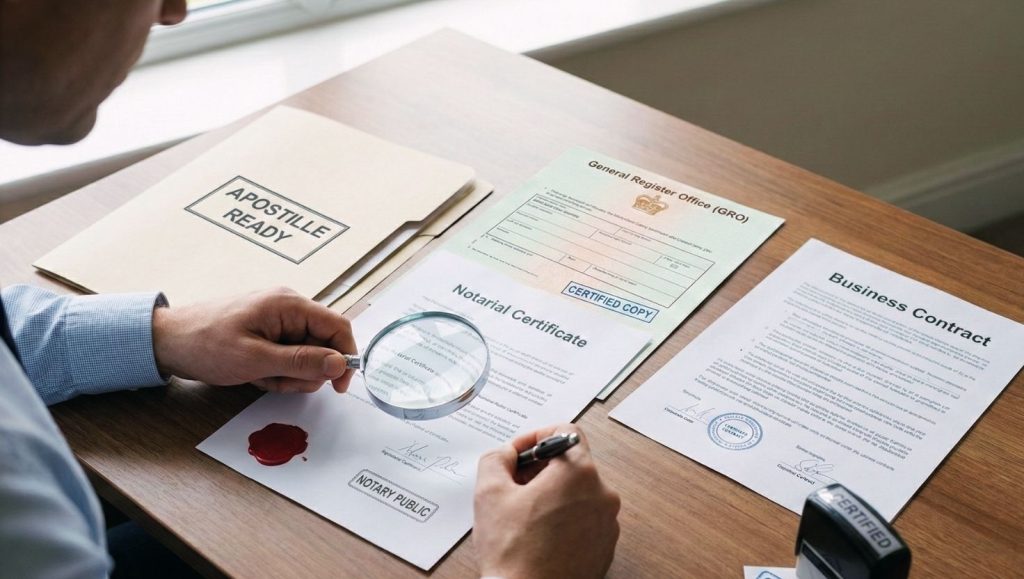
How to get an apostille in the UK step by step
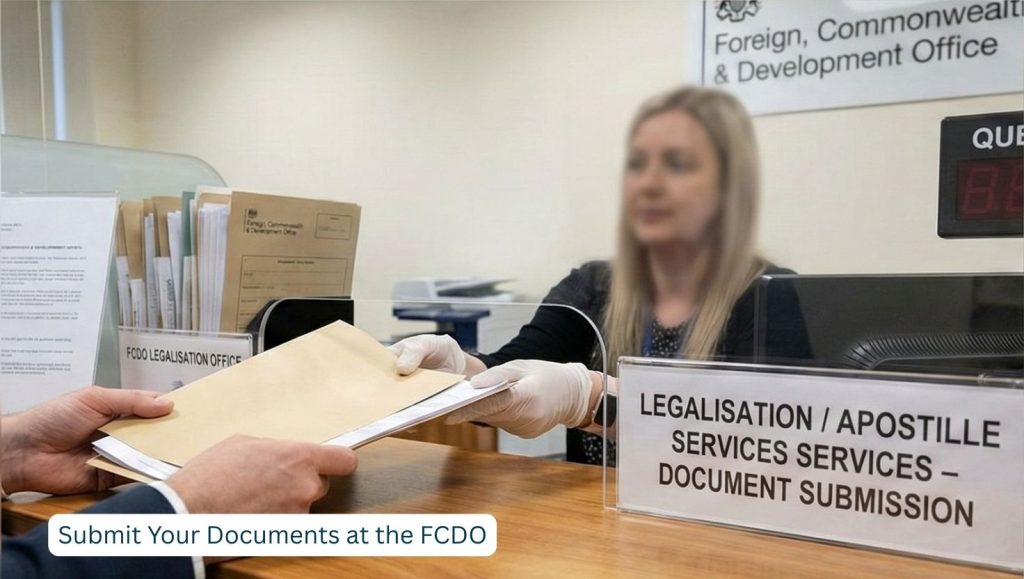
The FCDO has standardised the process of acquiring apostilles in the UK. Here’s how to go about it step by step if you choose the DIY route.
The standard processing time for paper-based apostilles under the DIY route is typically over three weeks.
Choosing the right certifier for your apostille
You can use either an FCDO-registered solicitor or a notary public to certify a document before submitting it to the FCDO for an apostille.
For either route, you must ensure the professional details their full name, professional status (solicitor/notary public), and address. They must also date the certification and sign it in wet ink.
To avoid delays in getting your apostille, it is best to use an FCDO-registered solicitor or notary. You can find such a certifier by plugging into our professional network at London Apostille Services Ltd.
DIY apostille vs. full-service support
While you can apply for an apostille directly through the government website, it’s best to let an apostille agent handle the process on your behalf.
Specifically, the FCDO has registered business users (apostille agents/facilitators) who can drop off and pick up documents in person.
London Apostille Services Ltd. is one such registered user, and we offer an all-inclusive service that includes facilitating document certification on your behalf. We have vetted London solicitors and notaries in our network to facilitate this step.
Here’s how using our full-service support versus going the DIY route compares:
Therefore, the full-service support option is significantly superior if you value speed and convenience.
Contact our team today to get your UK document apostilled quickly. We’ll provide expert guidance to ensure it is fully legalised for its specific destination.
Frequently asked questions (FAQs)
Here are answers to some common questions about how to apostille a document in the UK.
Get your apostille the right way
Getting any step in the apostille process wrong can lead to rejections, causing costly delays. It can be especially devastating when you have an urgent need for document legalisation.
Therefore, relying on full-service agency support is the way to go.
At London Apostille Services Ltd., we’ll ensure your documents are legalised correctly the first time. We offer:
Contact us today to take the guesswork out of the apostille process and get your documents legalised correctly on the first application.
![Statutory declarations – what you need to know [+ free form templates]](https://apostillelondon.com/wp-content/uploads/2026/04/Statutory-declarations—-what-you-need-to-know-500x383.webp)