
You may have heard that you need notarial services to get an apostille for your document, and you are probably wondering: can a notary apostille a document in the UK?
The question often arises because the apostille process for many types of documents is a multi-step undertaking involving the FCDO and legal professionals, such as notaries and solicitors.
This post breaks down the roles of these authorities and explains the difference between apostille and notary certificates.
TL;DR – Can a notary apostille a document in the UK?
No, a notary cannot apostille a document in the UK.
The only authority that can issue apostilles in the UK is the Foreign, Commonwealth, and Development Office (FCDO).

Key differences between notarisation and apostille
While both notarial and apostille certificates prepare documents for use abroad, they are separate processes governed by different rules.
Here are the key differences:
Can a notary apostille a document? And why not…
No, a notary cannot apostille a document because they are not the authority charged by the UK government to process document legalisations.
A notary public is an internationally recognised legal professional who acts as an impartial witness. Their roles include:
Therefore, while notarisation confirms the authenticity of the signature and the proper execution of a document, it does not constitute document legalisation.
Who can issue an apostille?
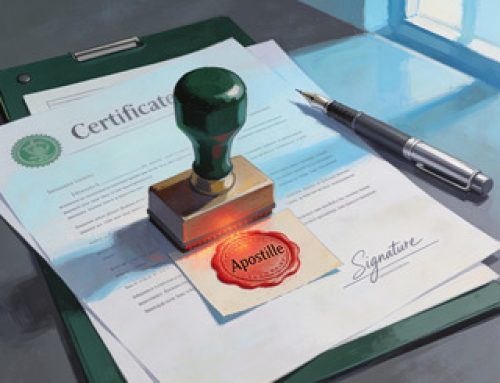
The competent authority designated by the UK government to issue apostilles is the Foreign, Commonwealth, and Development Office (FCDO).
The UK is a contracting party to the Hague Apostille Convention of 1961. The convention sought to abolish traditional document legalisation, which was a long and complex process. To streamline the process, it required member countries to:
Therefore, an apostille issued by the FCDO Legalisation Office will generally be accepted by authorities and institutions in over 125 countries that are parties to the convention.
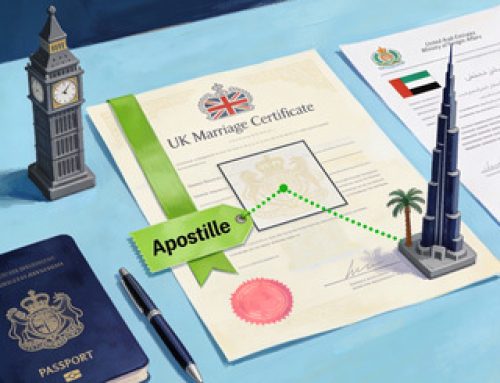
Note: if your destination is a country that is not party to the convention (e.g., the UAE, Angola, Egypt, Malaysia, Thailand, Kuwait, and Qatar), you can use an apostille certificate, but there is an additional requirement for embassy attestation.

Options to get an apostille in the UK
You can get an apostille from the FCDO by applying directly or going through an FCDO-registered agent or facilitator.
You’ll find the DIY route inefficient because:
Using an FCDO-registered agent helps solve these inefficiencies.
We’re London Apostille Services Ltd., an FCDO-registered apostille agent with over 15 years of experience facilitating document legalisations for numerous destinations around the world.
Here’s how working with us to process your apostilles makes all the difference:
Further, we can facilitate the legalisation of your UK documents even if you are currently outside of the country.
Contact us today to get your documents notarised and/or apostilled. We facilitate both FCDO apostilles and consular legalisations.
The notary-to-apostille process, step by step
Notaries are often involved in the apostille process when you’re dealing with a document that is not a government-issued original.
For instance, if the requesting authority asks you to apostille a sworn translation of your degree certificate, the translation should be notarised first before it can be apostilled.
For such cases, the apostille process is as follows:
Frequently asked questions (FAQs)
Here are answers to some common questions about notarisations and apostilles.
Get your apostille done right
While notarisation is an essential step in the apostille process for many types of documents, it is only one part of the document legalisation equation. You must also ensure your document meets the specific requirements of your destination country.
At London Apostille Services Ltd., we do everything right the first time, helping you avoid costly rejections and delays.
Contact us today to ensure your document is fully legalised for its destination.